
João Santos Pinto
João Santos Pinto is a partner at CVSP Advogados, a law firm that assists with the Golden Visa.

Who is eligible?
The Golden Visa is aimed at third-country nationals (non-EU/EEA/Swiss citizens) who make qualifying investments in Portugal. Direct family members (spouse, dependent children, dependent parents) can be included through family reunification.
Investment Options
Additional advantages
Freedom of Movement – Visa-free travel within the Schengen Area.
Family Reunification – The program extends to spouse, dependent children, and in some cases, parents.
Path to Citizenship – Eligibility to apply for permanent residency or citizenship (without the need to reside full-time in Portugal).
Flexible Stay Requirements – Low physical presence requirement (minimum 7 days per year).
Attractive Tax Options – Possibility to combine with beneficial tax regimes such as IFICI (NHR 2.0) if the investor moves to Portugal and becomes a Portuguese Tax resident, after the visa approval.
High Quality of Life – Safe environment, modern healthcare, reputable international schools, and a mild climate.
Strategic Location – Portugal as a gateway to both the European Union and Portuguese-speaking countries worldwide.
Diverse Investment Routes – Options include investment funds and company creation, allowing alignment with personal and business goals.
Following Law no. 56/2023 (Mais Habitação), real estate and bank deposit routes were
eliminated. In 2025, the eligible options are:
- Scientific research – Minimum €500,000 in R&D projects.
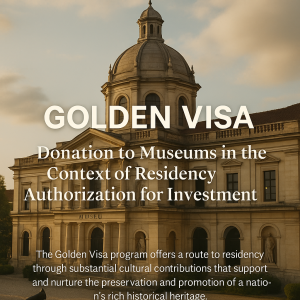
- Artistic production or cultural heritage – From €250,000.
- Investment funds/venture capital (non-real estate) – At least €500,000, minimum duration of 5 years, 60% in Portuguese companies.
- Job creation – At least 10 jobs. In low-density areas, the minimum amounts may be reduced by 20%.
- Business investment – €500,000 in establishing/reinforcing a company, with creation/maintenance of 5 jobs.
The most popular routes at present are investment in funds and company creation.
Advantges and Disadvantages (Investment Funds vs. Company Creation)
| Route | Advantages | Disadvantages |
|---|---|---|
| Investment Funds | • Professional management by venture capital firms • Limited need for direct involvement in Portugal • Portfolio diversification | • No control over the fund’s strategy • Returns not guaranteed and dependent on fund performance • Real estate funds excluded |
| Company Creation | • Greater control over the investment and operations • Potential for direct revenue in Portugal • Supports the local economy and may benefit from incentives | • Requires active management involvement • Higher operational and labor risks • Obligation to create/maintain jobs even in downturns |
Conclusion
The Portuguese Golden Visa remains one of the most attractive residency-by-investment programs in Europe, combining flexibility, low physical stay requirements, and a clear path to citizenship. While real estate is no longer an eligible route, alternative investment options — such as funds or company creation — continue to provide investors with opportunities to secure residency while aligning with their financial and business strategies. Moreover, the program’s added benefits, from family reunification to visa-free travel in the Schengen Area, make it a compelling choice for international families seeking stability, mobility, and access to the European Union.
Although real estate has been eliminated as a standalone route, this does not prevent, for example, an investment fund or a company from operating in the hospitality or tourism sector, nor does it prevent a company from acquiring the premises needed for its business (head office, warehouse, hotel, or factory). The legislator’s aim was to remove pure real estate speculation, but productive investment can still involve real estate assets when linked to genuine economic activity.